Walks should be an enjoyable opportunity for your dog to exercise, explore, and spend time with you. However, things can quickly become frustrating when your dog bites its leash, turning every outing into a game of tug-of-war.
Leash biting is relatively common, especially among puppies and energetic dogs. While it may look playful, the behavior can signal excitement, frustration, overstimulation, or a lack of appropriate leash manners.
Understanding why it happens is the first step toward calmer, more enjoyable walks.
Why Does Your Dog Bite Its Leash?
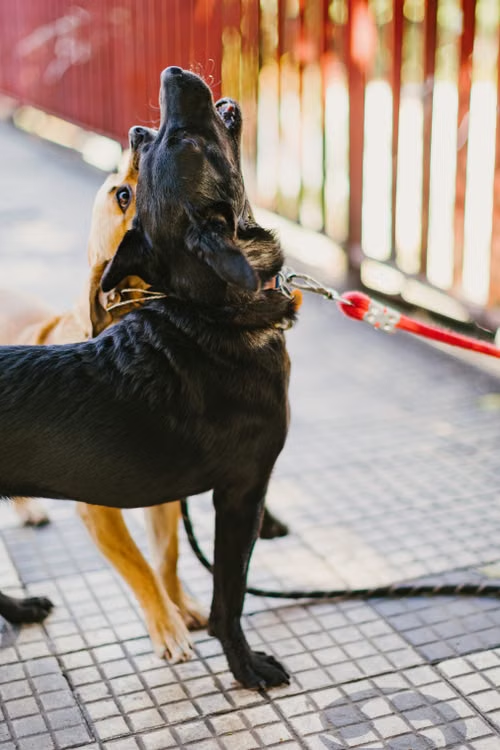
File name: two-dogs-leash-outdoors
Alt-text: two dogs on leashes standing outdoors.
Caption: Does your dog turn every walk into a tug-of-war? Discover why dogs bite their leashes and how the right training techniques can encourage calmer walks.
There is rarely one single explanation for leash biting. Dogs may grab, chew, or tug on their leash for several reasons.
Excitement: Some dogs become so enthusiastic about going outside that they redirect their energy toward the leash. Puppies and high-energy dogs may be particularly prone to this behavior.
Frustration: A dog may bite the leash when prevented from reaching another dog, person, smell, or interesting object. Tugging becomes an outlet for that frustration.
Overstimulation: Busy environments filled with unfamiliar sounds, sights, people, and animals can overwhelm some dogs. When overstimulated, they may struggle to regulate their behavior and begin grabbing the leash.
Playfulness: If you pull back when your dog grabs the leash, your pet may interpret your response as an invitation to play tug. Over time, this can unintentionally reinforce the habit.
How to Stop Leash Biting
When your dog bites its leash, avoid turning the situation into a pulling contest. Stay calm and minimize the attention you give the unwanted behavior.
Instead, reward your dog when they walk calmly with a loose leash. Treats and praise can help reinforce appropriate choices. Teaching cues such as “drop it,” “leave it,” and “heel” can also provide clearer expectations during walks.
Consider practicing in a quiet, familiar location before introducing increasingly distracting environments. Structured dog obedience training can help dogs develop impulse control, focus, and reliable walking skills.
If leash biting continues despite consistent training, working with a professional dog trainer can help identify what triggers the behavior and create a training strategy suited to your dog. Professional dog training in Conyers, GA, can be particularly valuable for persistent leash issues or dogs that become highly frustrated or overstimulated outdoors.
Ready to turn stressful leash battles into calmer, more controlled walks?
World Class K-9 is a leader in professional dog training and safety, and is delighted to be your trusted training partner.
Our experienced trainers develop K-9s that are obedient, confident, dependable, and prepared for everyday life while maintaining the ideal balance between loyal companionship and protective ability.
Discover how personalized training can help you and your dog build better communication, stronger trust, and lasting walking manners.