
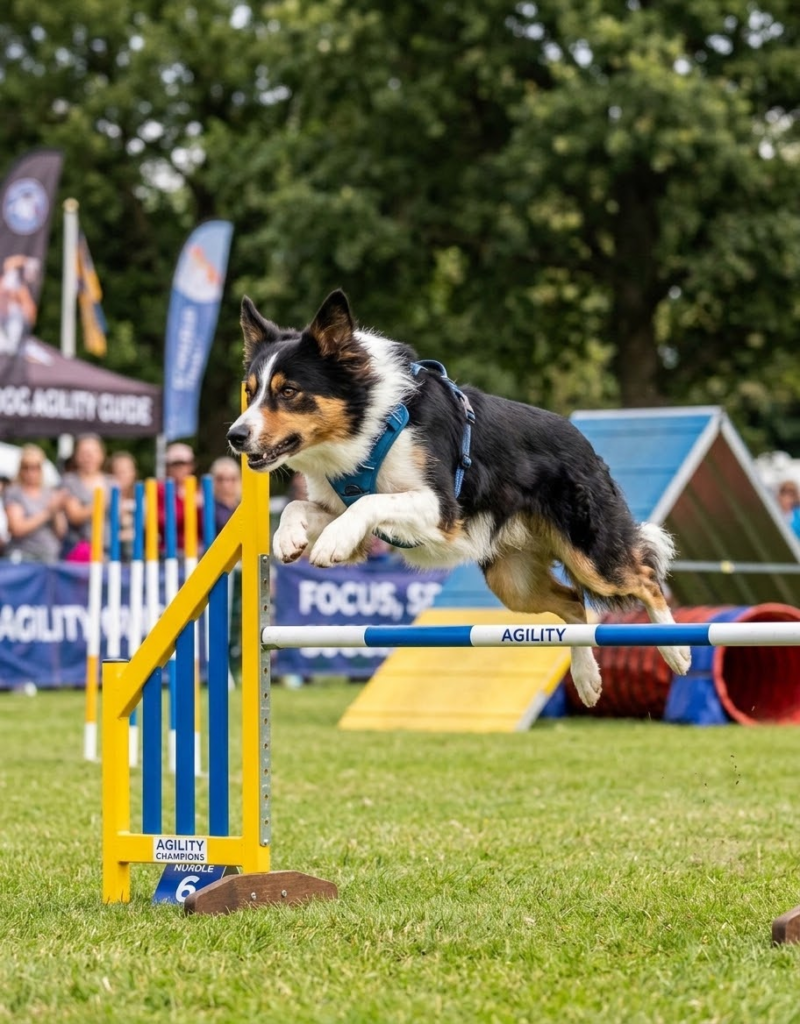
Dog agility is more than guiding a dog through jumps, tunnels, and weave poles. Successful agility training requires confidence, focus, communication, physical coordination, and trust between the dog and handler.
A structured approach helps dogs understand expectations while keeping training engaging and rewarding.
Start With Foundational Obedience
Before introducing agility equipment, establish basic obedience skills. Commands such as sit, stay, come, and place help dogs respond reliably to direction.
Focus on attention around distractions as well. A dog that consistently looks to the handler for guidance has a stronger foundation for navigating obstacles and responding to changing directions.
Keep early sessions short and consistent. Repetition helps reinforce desired behaviors without overwhelming the dog.
Build Confidence Before Adding Challenges
Confidence plays an important role when dogs encounter unfamiliar surfaces, movements, and equipment. Start with simple exercises that encourage exploration without creating unnecessary pressure.
Introduce new textures, platforms, low obstacles, and controlled movements. Reward calm investigation and successful attempts. If your dog hesitates, reduce the difficulty and give them another opportunity to succeed.
Confidence grows through achievable challenges. Each successful experience prepares the dog for more complex agility work.
Introduce Obstacles Step by Step
Avoid presenting a complete agility course immediately. Teach each obstacle separately so the dog learns what the equipment means and how to approach it safely.
Start with low jumps and straightforward tunnels before progressing to more demanding obstacles. Break complicated movements into smaller behaviors and reward each successful stage.
A reliable dog agility guide prioritizes understanding rather than speed. Once the dog becomes comfortable with individual obstacles, combine them into short sequences.
Strengthen Handler Communication
Agility depends on communication between the dog and handler. Dogs need to recognize verbal cues, body positioning, movement, and changes in direction.
Handlers should use clear signals and avoid giving conflicting instructions. Practice directional changes and transitions away from equipment during basic sessions.
Good communication develops through repetition. When the handler stays consistent, the dog’s understanding gets better.

Practice Consistently With Positive Reinforcement
Regular practice produces better results than occasional lengthy sessions. Set aside manageable training periods and gradually increase complexity as the dog becomes more capable.
A practical dog agility guide should also leave room for individual progress. Our team at World Class K-9 trains dogs based on their confidence, focus, physical ability, and experience.
For owners seeking structured guidance, we provide an opportunity to develop stronger obedience, communication, and training skills. World Class K-9 supports pet owners looking for professional dog training throughout the Metro Atlanta area.
Build Skills That Last
Agility training becomes more effective when obedience, confidence, obstacle skills, and consistent reinforcement work together. Build reliable behaviors one step at a time, instead of rushing forward to speed or complicated courses.
With patience and purposeful practice, agility becomes an engaging way to strengthen focus, responsiveness, coordination, and the working relationship between dogs and their handlers.
Ready to Train With Purpose?
Build stronger agility in dogs alongside focus and confidence with professional dog training in Conyers, GA, designed around your dog’s individual and training needs.
Explore our services to find the perfect fit, or contact the World Class K-9 team today to discuss your dog’s specific needs.